Children’s Perceptions of Basketball*…
An Attempt to Explain our Love and Enthusiasm for the Sport of Basketball…
EBAG has been established about seven years ago with the main intention to help European basketball to grow and further increase its popularity. Besides several different positive aspects and reasons for our commitment to basketball, our main driver has been the solid belief that sports in general, and basketball in particular, can thoroughly touch kids’ lives and have a huge positive impact on them.
This is genuinely what we think as the main reason underlying our passion for the sport of basketball. We also believe (and to a certain extent clearly observe that) for (almost) everyone engaged in basketball, there is a story which led to the creation of an enthusiastic and (almost) unconditionally positive feeling towards basketball, in most of the cases stemming from the childhood.
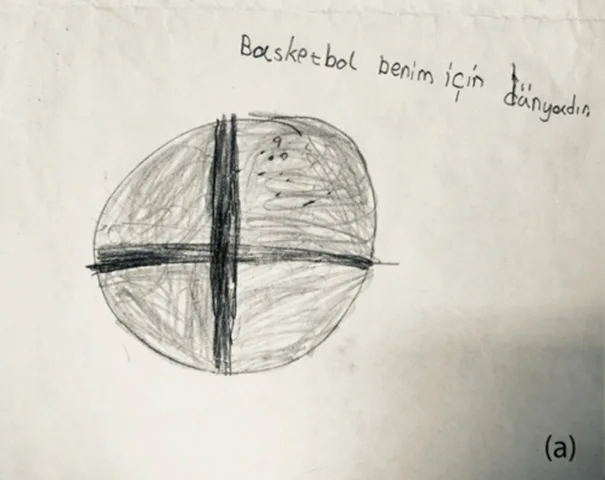
A recent scientific publication* that was written by three members of the Faculty of Sports Sciences at Gazi University in Ankara/Turkey provide quite interesting insights into children’s perceptions of basketball through metaphors and drawings. Nagihan Caredar, Aylin Özge Pekel and Cagdas Özgür Cengizel performed a quite interesting and insightful study into the world of children aged between 7 and 12 years old.
A phenomenology design, one of the qualitative research methods, was used in this study to determine the perceptions of children who receive basketball training in sports schools through metaphors and drawings. This research method aims to reveal perceptions and events in a realistic and holistic way in their natural environment.
Some of the children used the metaphors of “life” and “success” to describe what basketball means for them:
“Basketball is like/similar to life because we always have to strive to achieve something, even if we can’t achieve, we must strive.”
“Basketball is like/ similar to life because it is a part of you, you can sleep with it and wake up with it, your future depends on it.”
“Basketball is like/similar to success; because in basketball believing is more than half of the success. If we believe in ourselves, we can achieve it; even if it is difficult.”
Below are some further examples of how children see the game of basketball whihc are directly cited from the above mentioned study.
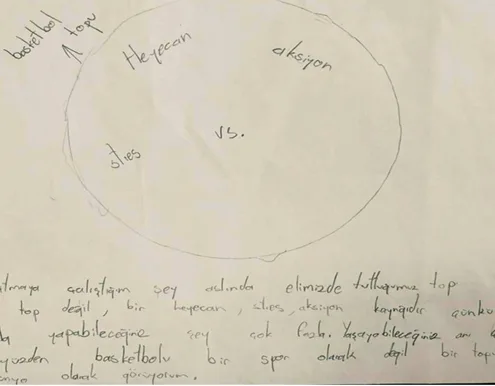
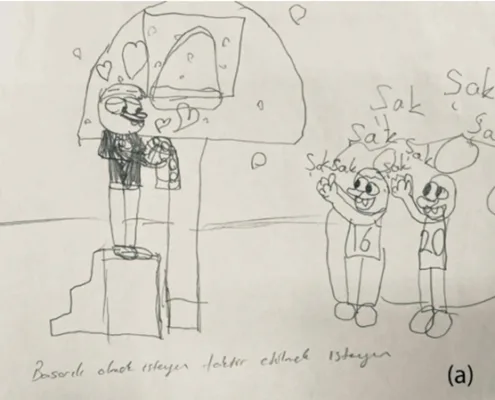
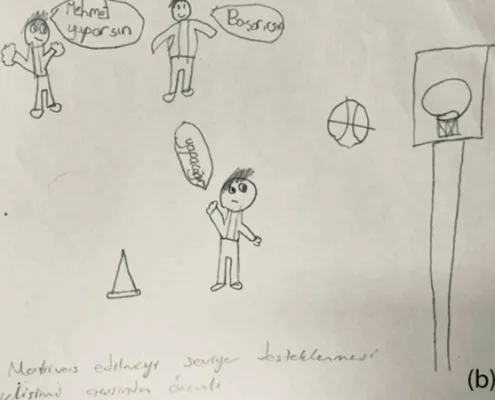
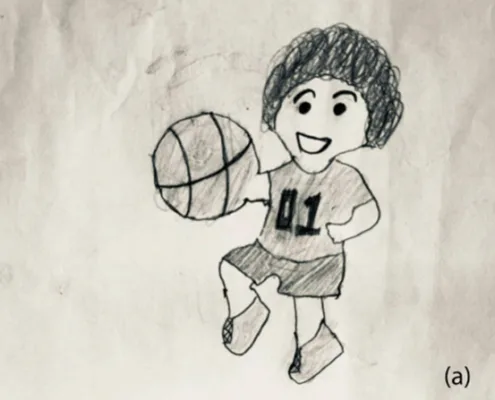
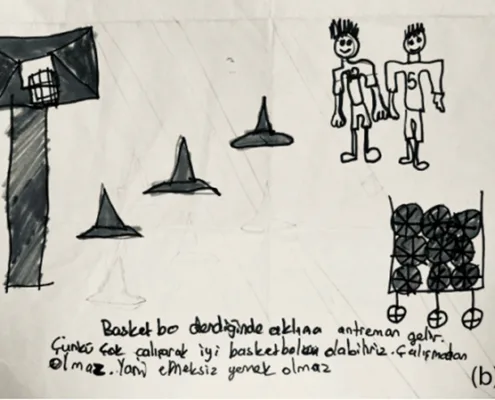
In our opinion, this study is yet another proof that basketball is not just a “game”, but rather a very powerful means to have a positive impact on the lives of children.
All photos above are taken from the study. *) Full paper can be found here:
https://papers.ssrn.com/sol3/papers.cfm?abstract_id=4083514
We thank the authors of this study for putting together such an authentic and interesting analysis of basketball’s emotional aspects perceived by children.
EBAG